Replacing a cracked concrete drive
When a poured slab has cracked or dropped, we take it out and build a fresh base, so the new surface isn't sitting on whatever let the old one down.
Driveway cracked, sunken or patched one too many times? We lay interlocking pavers on a packed base that holds up to your cars.
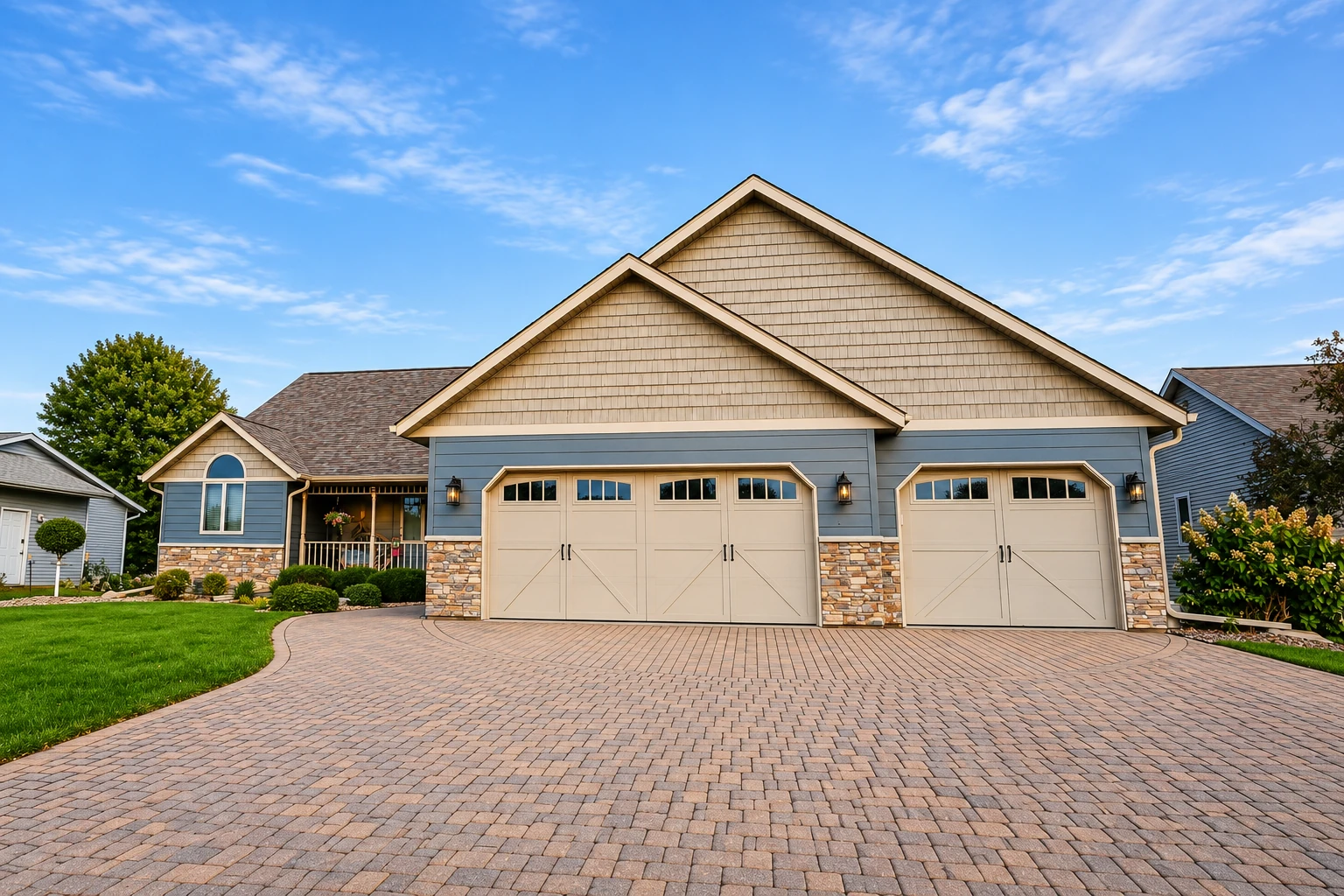
Driveway pavers in Yucaipa are concrete pavers set on a packed gravel base and a thin sand bed, laid in a pattern that locks them together so the driveway holds up to your cars day after day.
When someone calls about a driveway, it's usually a concrete slab that's cracked, dropped at one end or been patched more than once, and I want to know why before we replace it, because new pavers over the same soft spot or bad drainage would just fail again. The price moves with the size of the drive, whether an old slab or asphalt has to come out and be hauled off, how deep the base has to be on your lot, and whether you choose standard or permeable pavers. The schedule turns mostly on the tear-out, the digging and any permit the city requires, and the written estimate I write after looking at your lot spells out the work and materials so you have your own figure to go on.
I come out to look at your driveway and write the estimate myself, then I'm on site checking our crew of masons as they go, so the job matches what we agreed.
Before starting this business in 2017, I ran a landscape supply yard selling block, brick and stone, so I can explain the material choices plainly before you pick one.
We're licensed and insured, and the job is backed by our satisfaction guarantee. I'd rather spend extra time on your questions than have you sign off on work you don't follow.
I start by looking at the lot, where the water runs and what's under the old driveway, and the estimate tells you how deep the base will be so you know it before anyone digs. Our crew takes out the old slab if there is one and digs down far enough for that base, then lays the gravel in layers and packs each one, because gravel packed all at once stays soft underneath and settles later. We set a solid edge along the sides so the pavers can't creep outward, spread and level a thin sand bed, and lay the pavers. On a driveway we lean toward herringbone, a zigzag pattern set at 45 or 90 degrees to the drive, because it locks together best under cars, which is also what the paver industry's guidance recommends where cars drive every day. Then we cut the edges, run a heavy vibrating plate over the surface to seat the pavers, sweep sand into the joints and clean up. Ask us for spare pavers from the same batch and we'll leave them with you, so a later patch matches instead of standing out.
Two other jobs often come up while we're out there. If your driveway cuts into a slope or has a bank beside it, the soil there needs holding back, and we plan that retaining wall construction along with the driveway so water drains away from both. If the brick steps, block planters or stone columns out front are worn or loose, our masonry restoration work brings them back so they don't look tired next to new pavers.
When a poured slab has cracked or dropped, we take it out and build a fresh base, so the new surface isn't sitting on whatever let the old one down.
An extra spot beside the drive for a second car or a trailer can be laid in the same paver and pattern, so it reads as one driveway instead of an add-on.
Running the same paver or border from the driveway up to the front door ties the yard together, and we plan the two so the seam between them sits cleanly.
If a section sinks or a utility line needs digging up, pavers can be lifted, the base repacked and the same pavers set back, which you can't do with a poured slab.
Send the form and we'll reply within one business day to set a time. I come out, look at the lot and write up a free estimate that spells out the work and materials, with no obligation.
Length times width is close enough for a first talk, and it lets us talk about the scope of your driveway before I come out to measure it properly.
Tearing out and hauling off concrete or asphalt is its own work and adds to the price, so tell us what's there now and whether it all has to go.
Shots of the slope, the street edge and where water runs during rain help me arrive knowing what to look at, so the visit goes straight to your questions.
Herringbone and straight-row layouts, border courses, color blends and walls beside a drive, shown as examples to talk over at your estimate.
Here's what homeowners ask me most before choosing pavers, from cost and base depth to permits, licensing and what the contract should say.
Sand-based paver driveways in the San Bernardino area usually cost about $16 to $19 a square foot with the base, not counting removal of an old driveway. Your figure moves with the size, the tear-out, the base depth and whether you go permeable. The written estimate I give you after looking at the lot has your number.
Paver industry guidance calls for at least 6 inches of compacted base under a home driveway on well-drained soil, and 2 to 4 inches more on wet or weak soil. The price guide behind the cost figure above assumes a 4-inch base, which is thinner, so ask each contractor how deep they'll go on your soil. Comparing that across quotes tells you more than the price alone.
They can be, if not much dirt or dust reaches the driveway. Design guidance keeps them off very dirty sites, where muddy runoff or blowing dust can clog the surface fast. Where they fit, you keep them working by sweeping or vacuuming, and a clogged surface can be vacuumed out so water soaks in again. I look at that when I come out.
For any part of the work in the public right-of-way, the strip along the street, the permit comes from the City of Yucaipa's Engineering Division, which issues encroachment permits and inspects construction there. Before we start, I check with the city about what your job needs, and when a permit is needed we handle the paperwork and inspections and tell you if anything needs your signature.
California's contractor law treats building or replacing a driveway as home improvement work, and the state contractors board has a license classification that covers laying paving and other surfacing materials. So it's fair to ask any contractor what license they hold for paving work. We're licensed and insured, and I'm glad to go over it at the estimate.
In California, a home improvement contract has to include certain information, notices and disclosures, and any change must be in writing and tell you about your right to cancel. You can also ask the contractor to name any subcontractors, with each one's contact information, license number and classification, and the main contractor is responsible for the project. Our estimate spells out the work and materials.
We're based in Yucaipa and work the cities around it, so call (909) 768-8021 or use the form and ask if we reach you.