A brick or stone fireplace built here
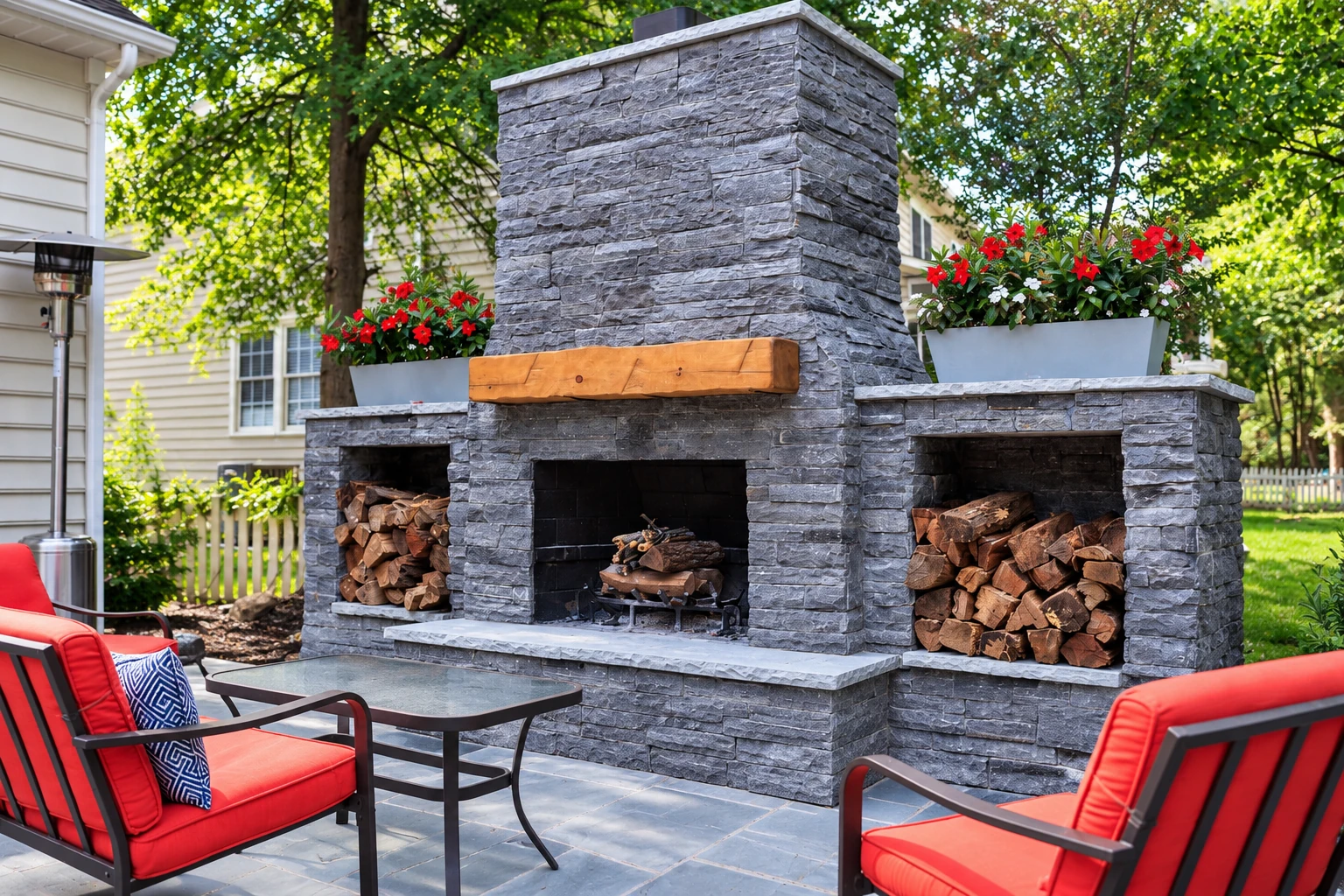
Our masons build the firebox, hearth and surround on site from brick or stone. It's the most work, and it suits owners who want solid masonry rather than a unit behind a facing.
Drafty old fireplace, or an empty wall where you want one? We'll match the unit to your house and fuel, then set it properly.
Fireplace installation in Yucaipa comes down to one of three jobs: building a brick or stone fireplace on site, setting a factory-made unit, or fitting an insert into the firebox you already have. Each one gives you a fire that suits the room and the fuel you want.
Most calls start with an old fireplace that barely warms the room, a plan to switch from wood to gas, or a wall where you've always wanted one. The price mostly turns on which job it is, since building in brick or stone takes more labor than setting a factory unit, and on whether there's a sound chimney to use, how a gas unit will vent and how much brick or stone goes on the face. The schedule depends on what the chimney inspection turns up and how soon your unit arrives. I'll look at all of it on site and give you a written estimate that spells out the work and the materials.
I come out to see your fireplace, or the wall where one would go, and write the estimate myself. Then I'm on site while our masons work, checking it as it goes.
We're licensed and insured, and California's licensing board counts setting stone and fire brick as masonry contractor work, which is what a firebox and its surround are built from.
I'd rather spend extra time on your questions than have you approve work you don't follow, so we go through each option and what it means for your house.
We start by finding out what kind of fireplace you have now, if any, and which fuel you want, because that decides what can go in. If it's gas, we talk through how the unit will vent before anything else, and we'll suggest having the chimney inspected before we set anything, since a new unit is only as sound as the flue that carries its smoke out. Then our masons build the firebox and surround or set the unit, finish the hearth and the face, and clean up, with me on site checking the work as it goes.
A fireplace usually needs more masonry around it. Many owners want a stone face once the unit's in, and our stone veneer installation covers a surround or chimney breast in thin stone set over the wall. When a fireplace goes on an outside wall and needs a chase, the enclosure that carries the flue up the house, or a solid base under the hearth, we build it the same way we build concrete block walls.
Our masons build the firebox, hearth and surround on site from brick or stone. It's the most work, and it suits owners who want solid masonry rather than a unit behind a facing.
A factory-made fireplace comes ready to set, so most of our work goes into the opening, the hearth and the brick or stone face around it, which makes it look built in.
An insert sits inside your existing firebox and works much like a wood stove, so you keep the old fireplace but get a fire that puts more heat into the room.
Changing fuel means a different unit, a different vent and a fresh look at the chimney, so we plan it like a new install rather than a quick swap.
Send the form and we'll reply within one business day. Then I'll come out, look at your fireplace and write you a free estimate that spells out the work and materials, with no obligation.
Masonry, factory-built or none at all, what's there now shapes what can go in. If you're not sure which kind it is, that's fine, since I'll work it out on the visit.
Wood, gas and pellet units install and vent differently, so telling us your choice up front lets me look at the right things and write the estimate around that unit.
A phone picture of the firebox, and the chimney top if you can see it from the yard, helps me come out with a good idea of what I'm looking at.
These show brick, stone and block finishes, firebox shapes and hearth layouts you can point to when we talk about your own fireplace.
Here are the questions we hear most about adding a fireplace, choosing an insert, venting gas and what's allowed in Yucaipa homes.
Across the US, installing a fireplace usually costs about $2,000 to $10,000 per job, and that's the market's range, not our price. A factory-made unit, called low mass, is the lower-cost option widely used in new US homes, while a brick or stone fireplace built on site usually sits higher. Your written estimate from the site visit gives your own figure.
Usually, yes. An insert fits inside the firebox of an existing masonry or metal fireplace. If yours is factory-built, also called zero-clearance, it needs an insert designed and tested for that unit, so the first step is finding out which kind you have. If you're not sure, I can tell when I come out to look.
Yes, it's recommended. Chimney trade guidance recommends a Level Two inspection, a more detailed check of the chimney, whenever you add a new appliance or switch to one with a different fuel, efficiency or type, so book it before install day. It's also fair to ask any installer how they check that the flue liner in a masonry chimney is installed correctly.
Plan on venting it. The EPA doesn't support vent-free gas models because of indoor air quality concerns, and some places make installing them illegal. A gas unit can vent through an existing chimney, or directly out through the roof or the wall behind it, and working out which route fits your house is part of our planning.
Inside the South Coast air district, San Bernardino County says new construction may only include an EPA certified wood-burning heater, a pellet heater, a masonry heater or a dedicated gas fireplace as a permanent unit. In a High or Very High fire danger zone, the City of Yucaipa also requires fireproof materials for new construction or qualifying renovation. Unsure about your address? Ask through the form.
For heat, usually yes. Most traditional open fireplaces lose over 90 percent of the fire's heat up the chimney, and much of the room's warm air goes with it. Gas burns very cleanly, but efficiency varies widely between models, so compare before you buy. A pellet stove's automatic feed needs electricity, which matters if you want heat during a power outage.
Call (909) 768-8021 or send the form, and if your home sits outside Yucaipa, ask anyway, since we work across the cities around it.