Retaining walls on a slope
A stone wall holding back soil needs drainage behind it so water pressure doesn't build up over time. When you compare quotes, ask each contractor how they handle that drainage.
Planning a stone wall and not sure if it should be dry-laid, mortared or veneer? We'll help you pick the one your yard needs.
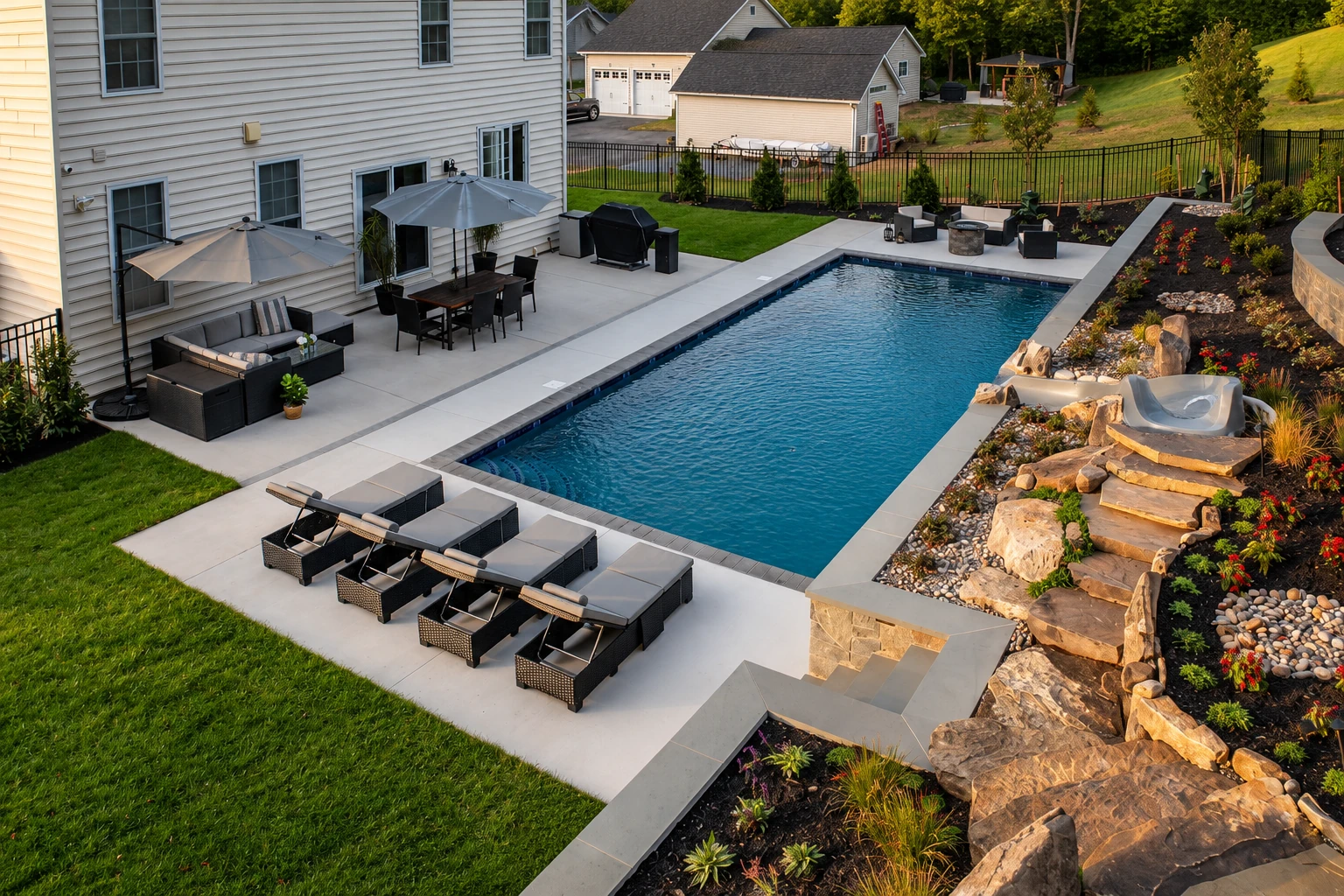
Stone masonry in Yucaipa means building walls and facings from stone, either laid dry or set in mortar, so you end up with a wall that suits its height and the work it does in your yard.
Most people call us with a spot that needs a wall, a slope they want held back, or a plain wall they'd like to see in stone, and they aren't sure which kind of stone work fits. The price mostly turns on how tall and how long the wall is, whether it holds back soil, which method it calls for and the stone you choose. The schedule turns on how much planning comes before we dig, especially when a taller wall needs an engineer's design. Your written estimate spells out the work and the materials, so you can see what you're paying for.
I come out, look at the spot and write the estimate myself, and I'm on site checking our masons' work as it goes, so the person who planned your wall sees it built.
I'd rather spend extra time on your questions than have you sign off on work you don't follow, so we talk through each wall type and why it fits your spot or doesn't.
We're licensed and insured and backed by our satisfaction guarantee. I sold stone, brick and block at a supply yard, then learned the trade under an older mason before starting this business in 2017.
It starts with me at your house, looking at how tall the wall needs to be, how far it runs and whether it holds back soil or holds something up, because those answers shape everything after. From there we help you choose between a dry-laid wall, a mortared wall and stone veneer, and for a taller wall we plan time for a structural engineer to design it before we build. We also check with the city or county office that covers your address about what the job needs, and if a permit is needed, we handle the paperwork and the inspections and let you know if anything needs your signature. Then our crew digs out, sets the base, lays the stone and cleans up when the wall is done.
Stone jobs often sit next to other masonry that needs attention. Brick near the new wall with worn, sandy joints may need brick pointing, and a cracked or settling wall you want faced in stone may need foundation repair before we cover it, so we're not facing a wall that's still moving.
A stone wall holding back soil needs drainage behind it so water pressure doesn't build up over time. When you compare quotes, ask each contractor how they handle that drainage.
Manufactured veneer is a lightweight, non-load-bearing facing made to look like stone. It should go only over a sound wall, not a crumbling one or foam-and-stucco EIFS siding, so we check first.
We plan where a yard wall runs, how high it stands and how it meets your patio or path before anyone picks up a shovel, because moving stone after it's set costs you twice.
When a stone wall is leaning, cracking or dropping stones, we find out why before we fix it, because a repair that skips the cause just shows up again. Then we match what's there.
Send the form and we'll reply within one business day to set up a time for me to come out. The estimate is free, done on site and comes with no obligation.
Rough numbers are fine. How tall and how long the wall will be tells me early whether we're likely looking at a low dry-laid wall or one that needs mortar and more planning.
A wall holding back a slope is a different job from a freestanding garden wall or a veneer facing, so knowing which one you have lets me come out with the right questions.
Send photos of the area, the slope and any wall already standing there, so I can see what we're working with and how our crew will get stone in before I visit.
These example photos show stone finishes, wall styles and veneer layouts you can point to when we talk through what fits your yard.
Here are straight answers to what homeowners ask before they plan a stone wall or a stone veneer job.
It usually comes down to the wall's height and what it has to hold. A dry-laid wall stands on gravity, its own weight and stones chosen to fit together, while a mortared wall uses cement-based mortar to lock the stones in place. Mortared stone is typically needed for taller walls, load-bearing walls and anything carrying forces that shift or move.
One stone supplier's guide advises bringing in a structural engineer for walls over 4 feet tall, because at that height the load calculations depend on the site. If you're planning a taller wall, allow time and budget for that design step, and mention the height when you call so I can talk it through on site.
In California, a masonry wall takes either a C-29 Masonry contractor or a landscaping contractor, according to the state licensing board. The board's C-29 class covers installing natural and manufactured stone, including walls and fences built with or without mortar. We're licensed and insured, and it's fair to ask anyone you hire which license they hold.
Stone veneer installation in nearby Riverside usually costs about $2,700 to $10,700 per job. That's the going rate for veneer in the area, not our price and not what a full stone wall costs. Where yours lands depends on how much wall you're covering, the stone you pick and what the wall behind it needs first.
Look up your address on California's EQ Zapp map from a computer, tablet or phone, and it'll show whether the property sits in a mapped earthquake hazard zone. Building in a mapped zone brings geologic and engineering investigations, which can find ground failure hazards and reduce them before construction starts, so it's worth checking before you plan a wall.
Go gently and follow your stone maker's care guide. One maker's guide says to lightly scrub its manufactured stone with a soft bristle brush, and warns that pressure washing or acid or petroleum-based cleaners may cause permanent damage and will void its warranty. It's worth knowing which product is on your wall before you clean it.
We take calls seven days a week, 7 AM to 10 PM, so call (909) 768-8021 or send the form with photos.