Foundation repair
When a crack runs through a foundation wall, we look for what moved it, like water or settling soil, before we patch or rebuild any of the block.
Superior Yucaipa Concrete and Masonry is a masonry contractor based in Yucaipa that repairs brick, block and stone and builds walls, walkways and pavers for homes in Mentone and the cities around it.
Mentone sits between Redlands and Yucaipa, and it isn't a city of its own. It's an unincorporated part of San Bernardino County, so the county handles the permit side that a city hall would. The calls we get here look a lot like the ones in Redlands and out in Banning: block walls along property lines, worn mortar on older brick and retaining walls on yards that slope. What moves the price is how big the job is, how much digging and hauling it takes, how easy the yard is to reach and how closely we have to match old brick or block. The schedule mostly turns on whether the county wants a permit and how soon matching material comes in, and the written estimate I leave you lays out the work and materials for your yard.
What's under the ground is where Mentone is different. Most of the community runs on septic tanks and leach fields rather than a sewer line, though your property may differ, so before we dig a footing for a wall or a base for pavers, we find out where the tank and field sit and lay the job out around them.
A crack or a loose brick is usually a sign of something else, like water or a footing that moved. I find that first, because a repair that skips the cause just shows up again.
I sold block, brick and stone at a supply yard before I learned the trade, so matching an older wall's brick, block and mortar color is the part of a repair I watch closest.
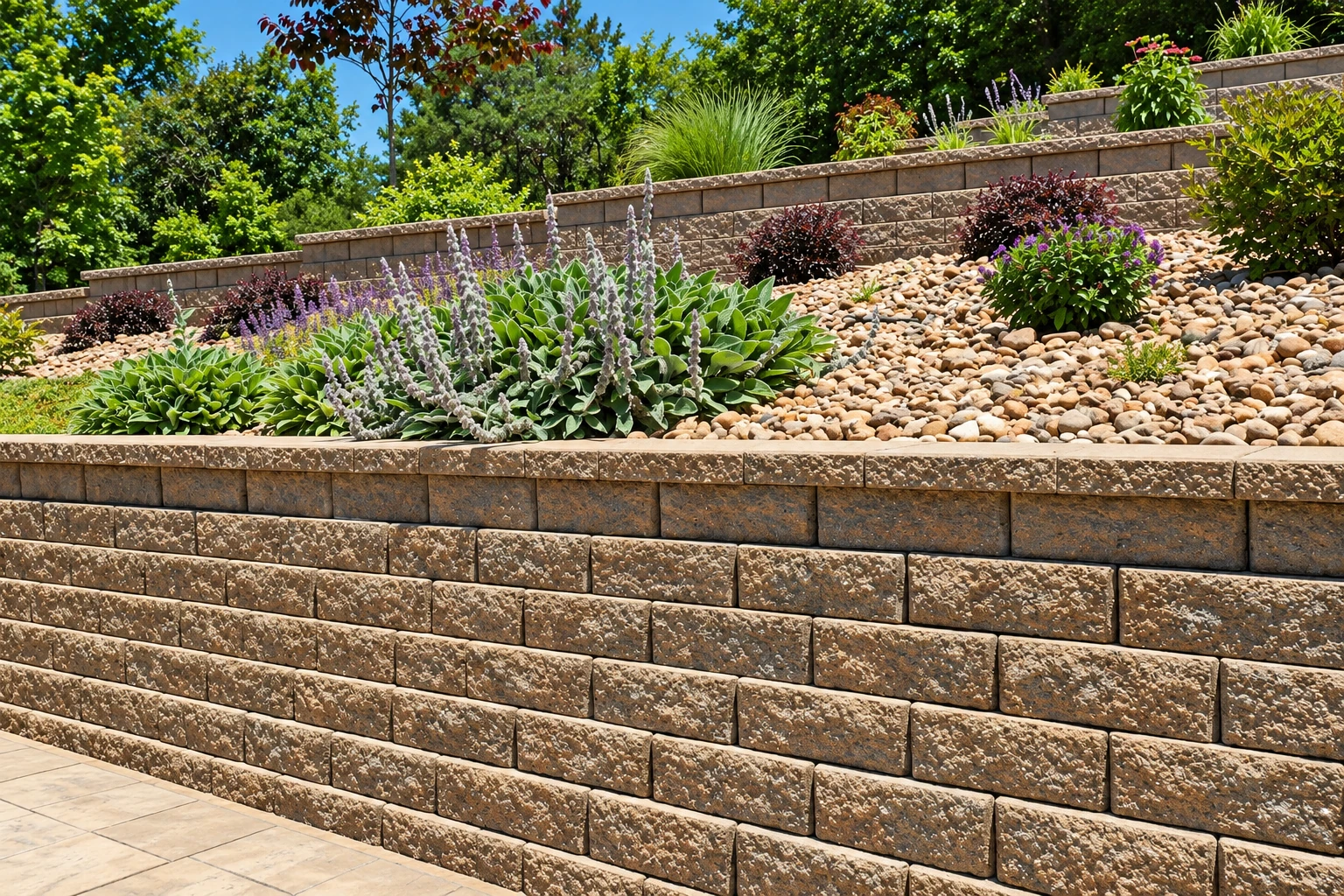
Footing size, drainage behind the wall and how the wall meets the slope get settled before anyone picks up a shovel, because fixing a wall that's already built costs far more.
When a crack runs through a foundation wall, we look for what moved it, like water or settling soil, before we patch or rebuild any of the block.
Loose brick on an older chimney usually starts with water getting in through a cracked crown, the concrete cap on top, so we fix the crown along with the brick.
When mortar joints have worn back from the brick face, we grind the old mortar out to an even depth and pack in new mortar matched in color.
Cracked bricks, or ones whose face has popped off, get cut out and replaced with brick we match in size, color and texture to the wall around them.
Pavers on a longer driveway hold up when the base under them is dug out and packed right, so most of the work happens before the first paver goes down.
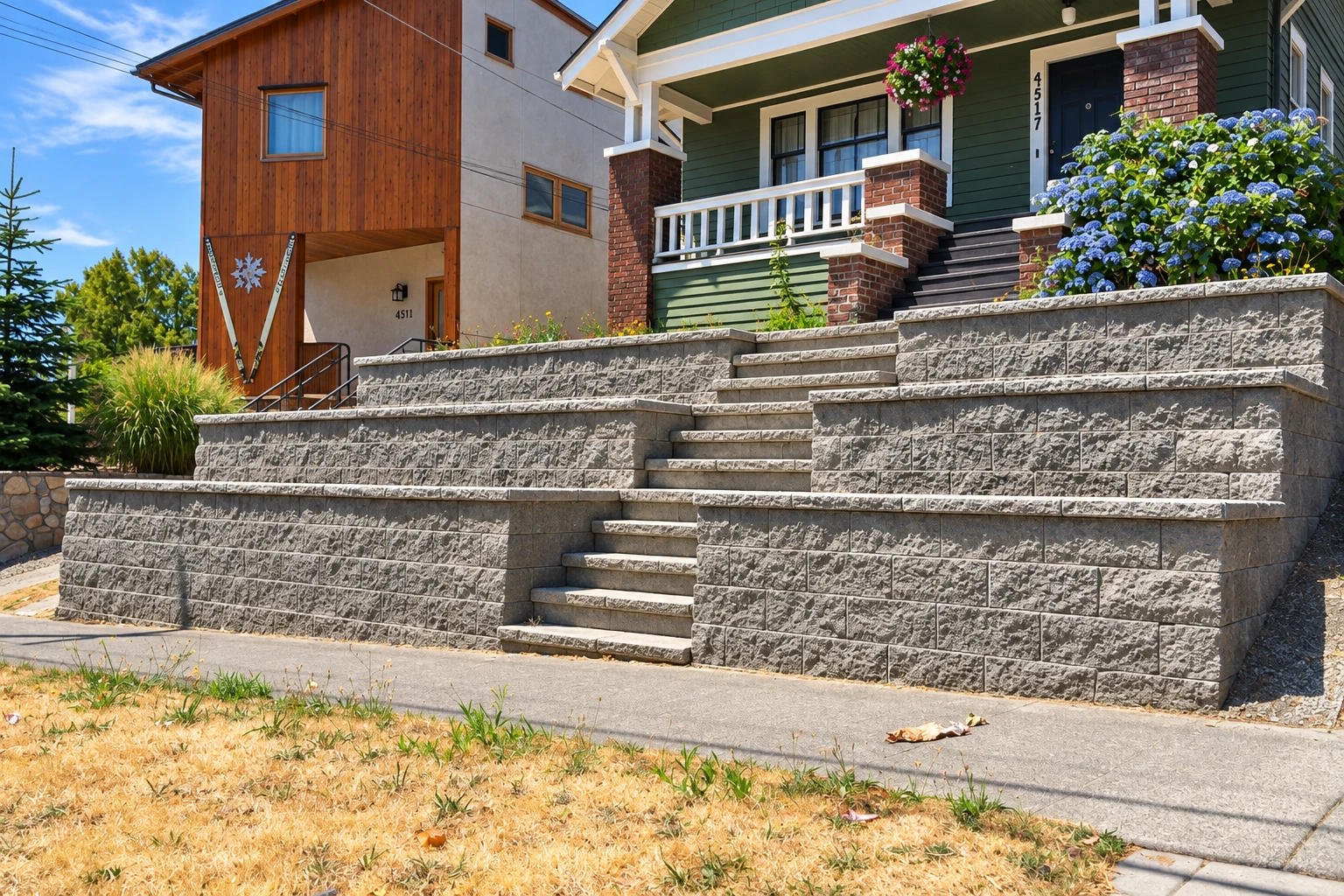
On sloped yards we work out the footing, the height and the drainage behind the wall before digging, because a wall that can't drain is the one that starts leaning.
Older brick and block that's stained, cracked or patched a few times over the years gets cleaned, repaired and repointed so it reads as one wall again.
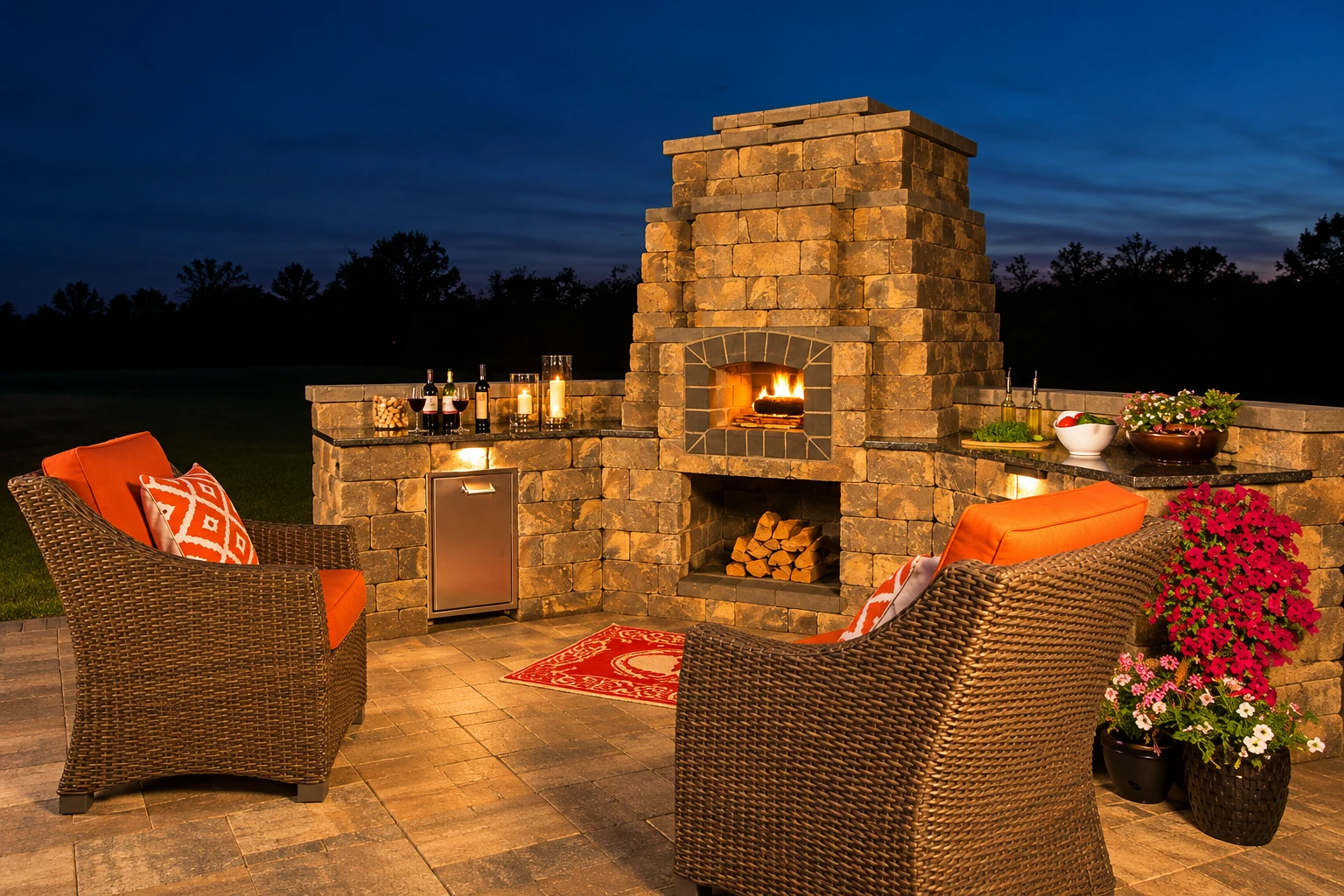
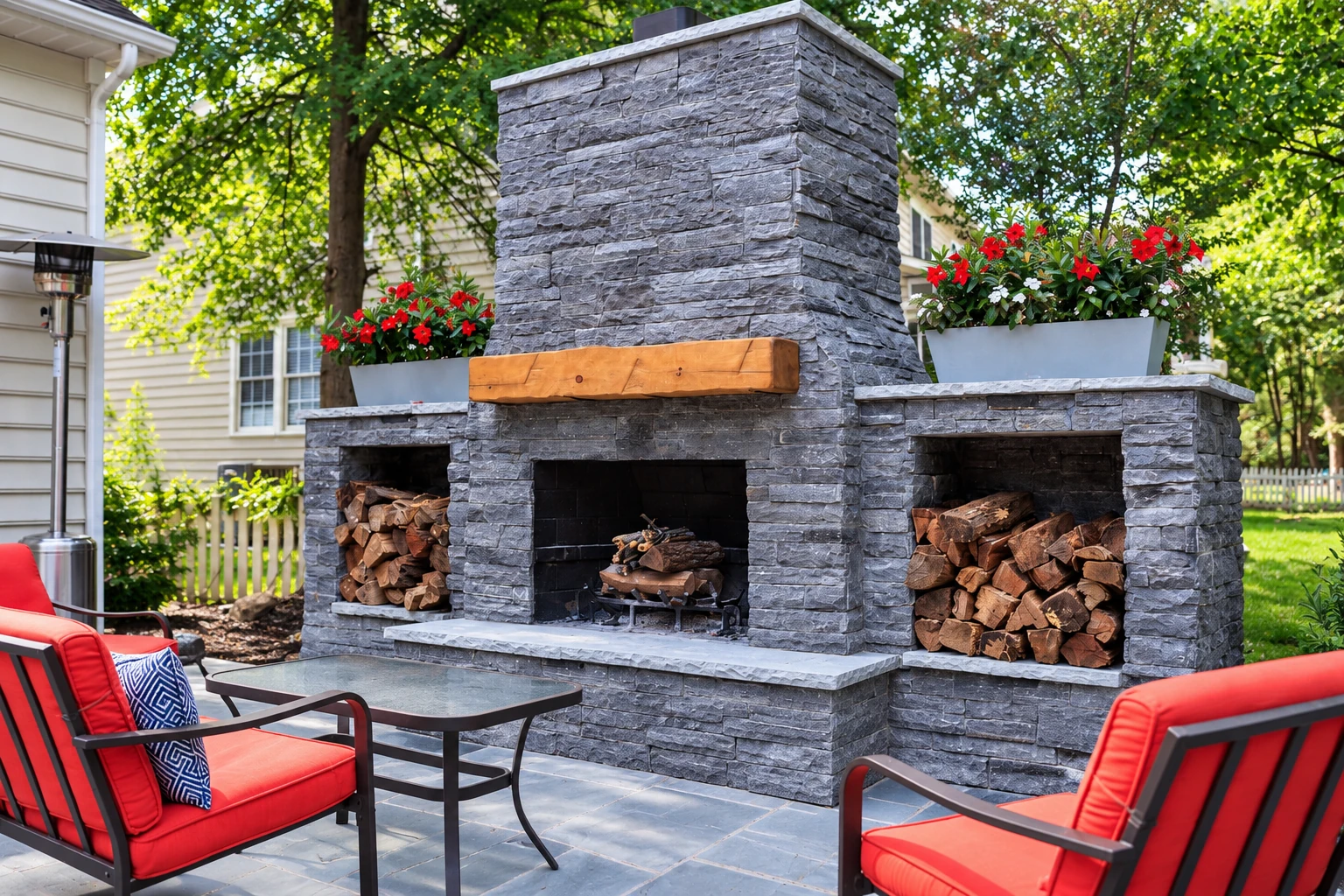
We build masonry fireplaces indoors and out, lining the firebox, the part that holds the fire, in firebrick and finishing the face in brick or stone.
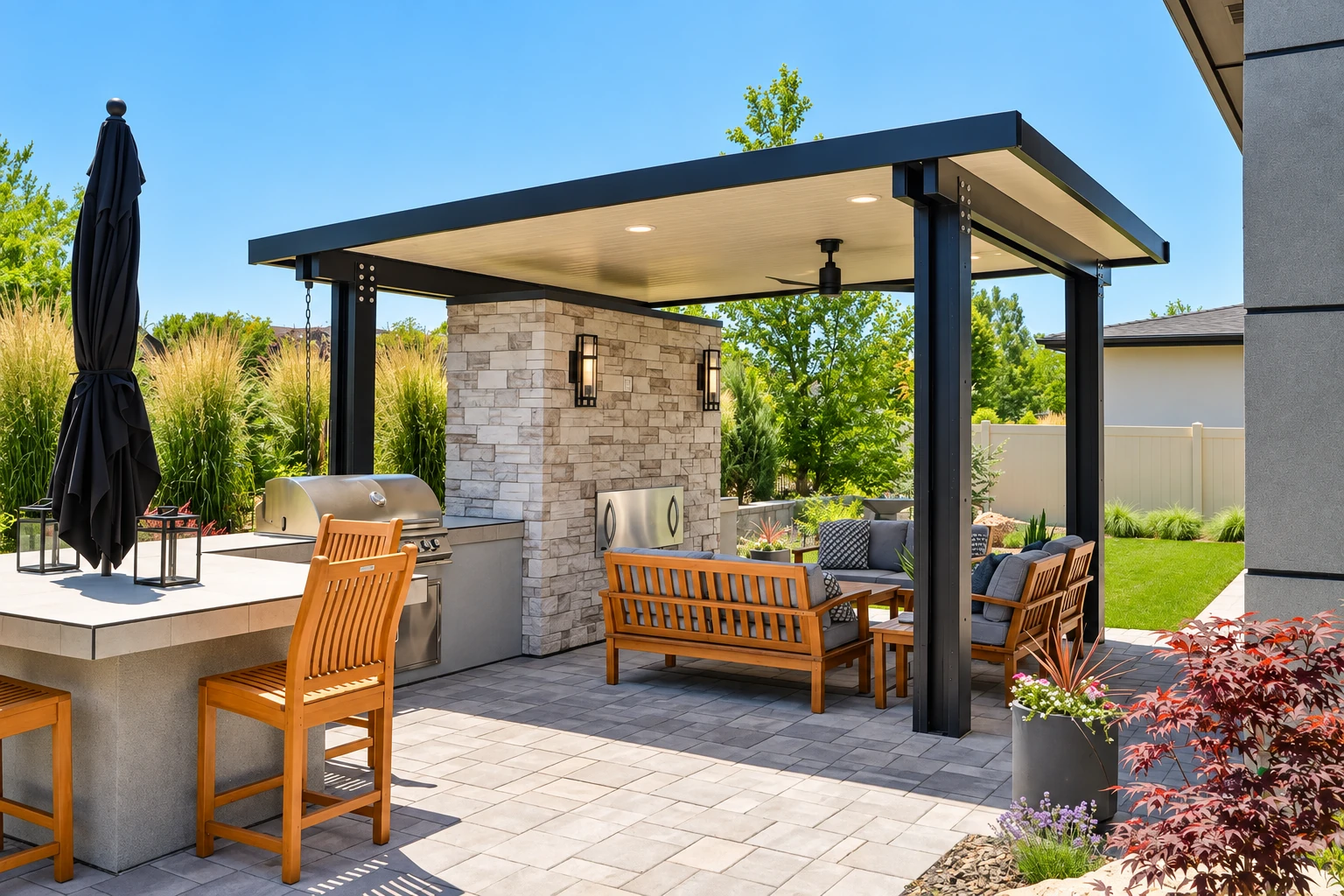
Thin stone set over a rough mortar base can cover block or framed walls, and we lay it so the joints look like a solid stone wall.
Property-line block walls go on a footing sized for the wall, with steel and grout in the block's hollow centers where it needs strength, so they stay straight.
For additions and outbuildings, we lay the block foundation wall on its footing, level and square, so whatever gets built on top of it starts out true.
We build the block base for grills, counters and bar tops, then face it in brick, stone or stucco so it fits the house and the yard.
Brick, paver and stone paths get a dug-out, packed base and a slight pitch, so rain runs off the path instead of sitting on it.
From low garden walls to taller privacy walls, we build on a proper footing and pick brick and mortar that look right next to your house.
Natural stone walls, steps and columns are laid by hand, each stone fitted to the ones around it, so the weight rests on stone and not just mortar.
Small runs of cracked or missing mortar, around a step or a few rows of a wall, get raked out and refilled before water works its way in.
Send the form and we'll reply within one business day to set a visit. I come out, look at the job and leave you a free written estimate, with no obligation to go ahead.
I look at the job and write the estimate myself. Our crew of masons does the work, I'm on site checking it as it goes, and it's backed by our satisfaction guarantee.
I'd rather spend extra time on your questions than have you sign off on work you don't follow, so ask about any line of the estimate, twice if you need to.
Before we start, I check with the county about what your job needs. If it needs a permit, we handle the paperwork and inspections and tell you if anything needs your signature.
Straight answers on permits, licenses and payments for a masonry job in Mentone, based on what the county and state require.
San Bernardino County's Building and Safety office issues permits for Mentone. Its list names structural repairs, additions and alterations, and new structures over 120 square feet, and it notes other work may need a permit too, so we confirm what your job needs before we start. Setbacks, the required distance from your property lines, have to be kept whether or not a permit is needed.
You do if the job moves 100 cubic yards or more of dirt, counting cut and fill, or disturbs a slope steeper than 2:1, two feet across for every foot of rise. If no grading plan or building permit is needed, a separate erosion control permit comes first. Another county page gives a different figure, so we confirm yours with Building and Safety.
There's no Mentone business license, and San Bernardino County has no license that covers the whole county, so the one to ask about is the contractor's state license. That comes from the Contractors State License Board, which licenses and regulates California's construction contractors. We're licensed and insured.
Under the state licensing board's rule, a down payment can be no more than $1,000 or 10 percent of the total contract price, whichever is less. That rule covers all home improvement projects, so a new wall, a paver driveway or a chimney repair falls under it the same way.
These cities have their own pages, but they aren't the only places we go. We're based in Yucaipa, so if you don't see your city here, call and ask.
We pick up seven days a week from 7 AM to 10 PM, so call (909) 768-8021 or send the form whenever it suits you.